Ayurvedic Management of White Discharge (Leucorrhea): Herbs & Home Care
✅ The Short Answer:
White discharge (Shweta Pradar) in Ayurveda is caused by Kapha aggravation in the reproductive channels, creating excess mucus. Normal discharge is thin, clear, and odorless. Abnormal discharge — thick, yellow, itchy, or foul-smelling — signals infection or Kapha-Pitta imbalance. The Ayurvedic protocol uses Pradrantak Churna internally, Triphala Kashaya wash externally, and dietary changes like avoiding dairy, sugar, and cold foods. Most cases resolve within 4-6 weeks of consistent treatment.
— Dr. Arti Singh (BAMS)
Medically Reviewed by Dr. Arti Singh (B.A.M.S.) | Last Updated: January 17, 2026 | Next Review Date: July 2027
Educational Purpose: The information in this article is written for educational and general information purposes only. It is not intended to be a substitute for professional medical advice, diagnosis, or treatment. Always consult a certified B.A.M.S. Ayurvedic physician or your primary healthcare provider before starting any herbal regimen, especially if you are currently taking hormonal or prescription medication.
"Doctor, I feel weak because of this white discharge. My bones are melting."
In India, this is a very common belief—that white discharge causes "Dhatu Kshaya" (Tissue Loss) or melting of bones. While the discharge itself doesn't melt bones, it is a sign that your body is not forming healthy tissues.
Leucorrhea (Excessive White Discharge) is not a disease itself; it is a symptom of an underlying imbalance. In Ayurveda, we call this Sweta Pradara.
Normal vs. Abnormal: The Check
Physiological (Normal)
- Clear or milky white.
- Odorless or mild musky smell.
- Increases during ovulation (mid-cycle, stretchy egg-white texture).
- Increases before periods (thick and sticky).
- Increases during pregnancy.
Pathological (Abnormal)
- Curd-like, chunky texture (Yeast/Candida).
- Yellow, Green, or Grey color (Bacterial/Trichomoniasis).
- Foul, fishy smell.
- Accompanied by itching, redness, or burning.
- Stains the undergarment continuously.
Ayurvedic Cause: The Weeping Womb
Ayurveda primarily links this to Kapha aggravation due to Mandagni (Low Digestion).
When you eat excessive sweets, cold dairy, or fried foods, digestion slows down. This creates Ama (toxins). This mucus-like Ama mixes with Kapha and accumulates in the reproductive system (Rasa Dhatu), flowing out as excessive discharge.
The 3 Dosha Types
- Vataja: Thin, watery, frothy discharge. Often with pain. Dryness.
- Pittaja: Yellowish, slightly burning, warm sensation. Acidic.
- Kaphaja: Thick, white, mucous-like, very itchy. Cold.
Home Remedies that Work
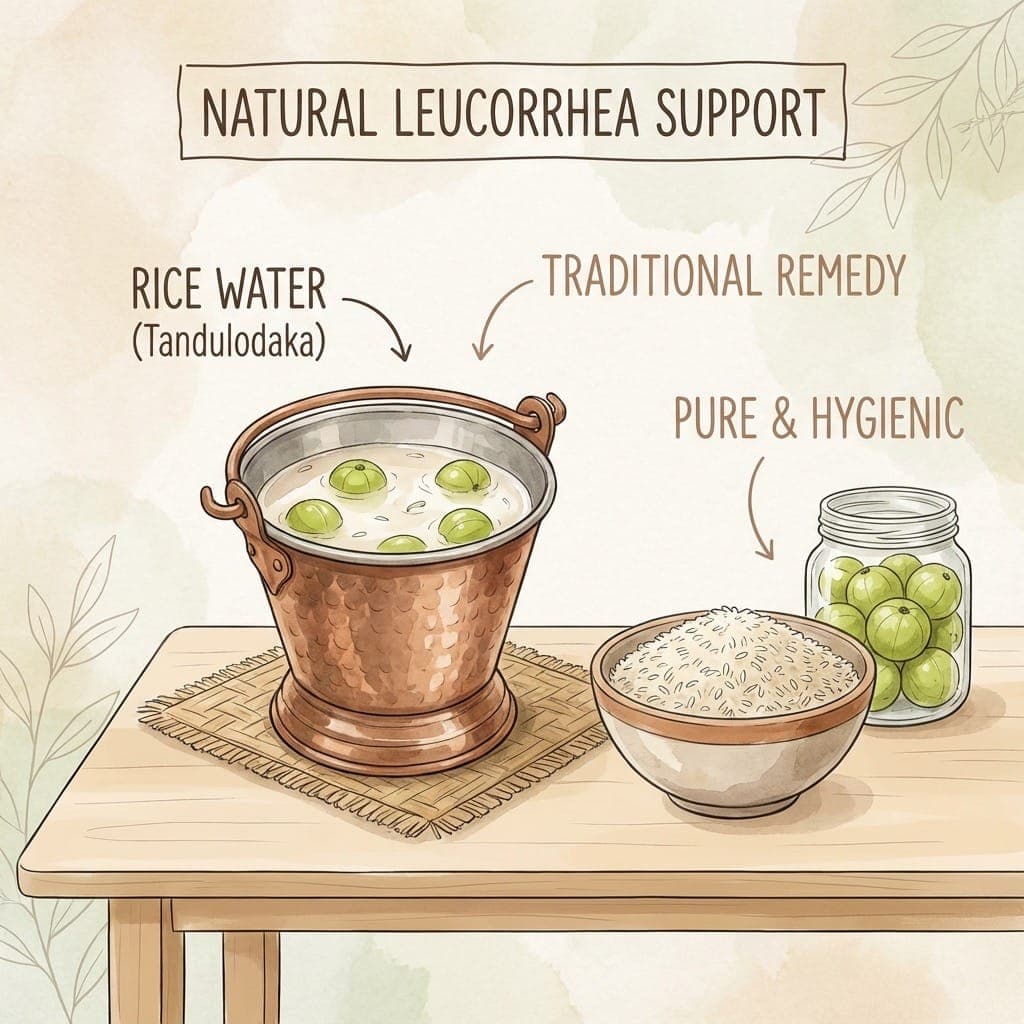
1. The Rice Water Wash (Tandulodaka)
This is the Gold Standard for Pradara.
Recipe: Soak 2 tbsp white rice in a glass of water for 4-6 hours. Drink the water.
Why? It is a powerful styptic (stops secretions) and coolant.
2. Amla & Honey
Take 1 tsp of Amla powder (Amalaki) mixed with 1 tsp of old Honey twice a day.
Why? Amla is 'Kashaya' (Astringent/Drying) and rich in Vitamin C, which boosts local immunity against infections. Honey scrapes away the Kapha mucus.
3. Vaginal Wash (Yoni Prakshalana)
Instead of using harsh soaps (which kill good bacteria) or plain water, use a herbal decoction.
Triphala Wash Guidelines:
- Boil 2 tbsp Triphala powder (or Neem leaves) in 1 liter of water for 10 mins.
- Strain it through a fine cloth (very important, no particles should remain).
- Let it cool to room temperature.
- Wash the vulva (external area) with this water while bathing.
Effect: Triphala is antimicrobial and astringent. It stops itching and reduces discharge instantly.
Dietary Villains & Heroes
- The Enemy: Sugar. Yeast feeds on sugar. If you have recurrent discharge/itching, cut out white sugar completely for 21 days.
- The Trigger: Fermented Foods. Idli, Dosa, Dhokla, and Yeast items can aggravate fungal infections. Avoid them during a flare-up.
- The Hero: Buttermilk (Takra). Drink spiced buttermilk daily with a pinch of Asafetida (Hing) and Fenugreek powder. It improves digestion and cleanses the flora.
Hygiene Mistakes to Avoid
- Stop Douching: Washing "inside" the vagina forces bacteria up and ruins the pH. The vagina cleans itself internally. You only wash the outside.
- Panty Liners: Avoid wearing them 24/7. They trap moisture and heat, creating a greenhouse effect for bacteria. Change your underwear twice a day instead.
- Dampness: Change out of sweaty gym clothes or wet swimsuits immediately.
FAQs: White Discharge
Does it cause infertility?
Usually no. But if the discharge is due to a severe infection (like PID) that travels to the tubes, it can cause blockage. Also, very thick/acidic discharge can kill sperm. Treating it effectively improves fertility.
Should I take antibiotics?
Only if it is a confirmed bacterial vaginosis or STI. For common yeast or non-specific leucorrhea, antibiotics often make it worse by killing good bacteria. Try the Ayurvedic acid-alkaline balance first.
Final Words
Remember: Consistency is key. Herbal remedies work gradually by addressing the root cause, not just suppressing symptoms. Give the protocol at least 6-8 weeks before expecting complete resolution. Most women see 50% improvement in the first month itself, which motivates them to continue.
A Word on Pregnancy: Some discharge during pregnancy is completely normal due to increased estrogen. However, if it becomes excessive, foul-smelling, or causes itching, consult your doctor immediately. Pregnant women are more susceptible to yeast infections and these need careful management to avoid complications during delivery.
The Probiotic Solution: Restoring Vaginal Flora
Your vagina has its own ecosystem—billions of good bacteria (Lactobacillus) that keep the pH acidic (3.8-4.5), preventing bad bacteria and yeast from thriving.
When this balance is disrupted (antibiotics, stress, poor diet), discharge worsens.
How to Restore Good Bacteria:
- Oral Probiotics: Take a women's probiotic supplement containing Lactobacillus rhamnosus and Lactobacillus reuteri (available at pharmacies).
- Homemade Buttermilk (Takra): Mix 1 cup plain yogurt + 2 cups water + pinch of cumin powder. Drink daily (provides natural probiotics). Do NOT use store-bought buttermilk with sugar.
- Fermented Foods: Idli, Dosa, Kanji (rice water fermented overnight) all contain beneficial bacteria.
When to See a Doctor Immediately
While most leucorrhea cases can be managed at home, certain symptoms require urgent medical attention:
- Green or gray discharge with strong fishy smell (Bacterial Vaginosis)
- Frothy yellow-green discharge (Trichomoniasis—STI)
- Cottage cheese-like clumpy discharge with severe itching (Severe Yeast Infection)
- Discharge with pelvic pain and fever (Pelvic Inflammatory Disease)
- Blood-stained discharge when not menstruating (could indicate cervical issues)
My Integrative Approach: Get tested to rule out STIs or serious infections. If confirmed bacterial/yeast, use the prescribed medication. Simultaneously, start Ayurvedic herbs and diet changes to prevent recurrence.
The Stress-Discharge Connection
Many women notice their discharge worsening during exam periods, job stress, or relationship issues. This is because:
- Stress suppresses immunity (depletes Ojas), making you vulnerable to infections.
- Stress disturbs gut bacteria, which directly affects vaginal flora through the gut-vagina axis.
- Cortisol (stress hormone) thickens mucus throughout the body, including vaginal secretions.
Stress Management for Leucorrhea:
- Ashwagandha: Take 1 tsp powder with warm milk at night (reduces cortisol by up to 30%).
- Pranayama: Practice 10 minutes of Anulom Vilom (Alternate Nostril Breathing) daily to balance the nervous system.
- Yoga Nidra: A guided meditation that restores Ojas. Search "Yoga Nidra for immunity" on YouTube.
Final Note: Vaginal discharge is not something to be ashamed of—it's your body communicating with you. Instead of masking it with endless creams and washes, address the root: digestive health, immunity, and hygiene. When you treat your body with respect (clean food, adequate sleep, stress management), it rewards you with balance and health.
Normal vs. Abnormal Discharge: Know the Difference
Let's be clear: Not all vaginal discharge is a disease. Women's bodies naturally produce discharge as part of the menstrual cycle.
| Aspect | Normal (Physiological) | Abnormal (Pathological) |
|---|---|---|
| Color | Clear to white, egg-white consistency mid-cycle | Yellow, green, gray, or frothy |
| Odor | Mild or no smell | Strong fishy, foul, or rotten smell |
| Quantity | Small amount (underwear stays dry most of day) | Excessive (need to use panty liners daily) |
| Associated Symptoms | None (no itching, burning) | Itching, burning, redness, pain during intercourse |
The Root Causes: Why This Happens
According to Ayurveda, Leucorrhea (Shweta Pradara) happens when the digestive fire (Agni) is weak, leading to:
- Excess Kapha: Eating heavy, cold, oily foods (dairy, sweets, fried) creates mucus, which flows out as discharge.
- Weak Immunity (Ojas Depletion): Chronic stress, poor sleep, and malnutrition weaken the body's defenses, allowing yeast/bacteria to overgrow.
- Poor Hygiene: Wearing synthetic underwear, using scented soaps, and not changing menstrual pads frequently disturb vaginal pH.
- Hormonal Imbalance: Birth control pills, PCOS, and thyroid issues alter vaginal flora.
Herbal Formulations for Leucorrhea
These classical Ayurvedic formulations target the root cause and provide lasting relief:
| Formulation | Action | Dosage |
|---|---|---|
| Pushyanuga Churna | The #1 remedy for leucorrhea. Astringent and antimicrobial | 1 tsp with honey twice daily |
| Chandraprabha Vati | Balances Kapha, strengthens urogenital health | 2 tablets twice daily |
| Ashokarishta | Tones the uterus, reduces excess secretions | 20ml diluted in water, after meals |
| Triphala Churna | Improves digestion (fixes root cause = weak Agni) | 1 tsp with warm water before bed |
Yoni Prakshalana (Vaginal Douching): The Forgotten Art
Ayurveda prescribed medicated vaginal washes centuries ago. Modern gynecology is rediscovering this now.
Important: This is NOT regular douching with harsh chemicals (which damages vaginal flora). This is gentle herbal wash.
How to Prepare Yoni Prakshalana:
- Boil 10-15 Neem leaves + 1 tsp Turmeric powder in 1 liter of water for 10 minutes.
- Let it cool to lukewarm (NOT hot).
- Strain the liquid.
- Use a douche bulb or simply pour over the vulva while squatting (external wash only if you're uncomfortable with internal douching).
- Do this once daily for 7 days (not during menstruation).
Why It Works: Neem is a powerful antimicrobial. Turmeric reduces inflammation. Together they restore vaginal pH balance naturally.
The Diet Protocol: Dry Up the Dampness
To reduce leucorrhea, you must reduce Kapha. This means eating foods that are light, dry, and warm.
Foods to EAT (Kapha-Reducing)
- Old Rice, Barley, Quinoa
- Mung Dal, Lentils (well-cooked with spices)
- Bitter Gourd, Fenugreek Leaves, Spinach
- Ginger Tea, Turmeric Milk
- Pomegranate, Amla (Indian Gooseberry)
Foods to AVOID (Kapha-Increasing)
- Milk, Cheese, Yogurt (especially cold)
- Sweets, Sugar, Desserts
- Fried Foods, Oily Food
- Bananas, Mangoes (very Kapha-genic)
- Cold Water, Ice Cream
Hygiene Practices: The Do's & Don'ts
✅ DO:
- Wear 100% cotton underwear (changes vaginal pH favorably)
- Change underwear daily (twice if heavy discharge)
- Wash with plain water (or herbal wash) after using the toilet
- Dry thoroughly before wearing clothes (moisture breeds bacteria)
- Sleep without underwear (allows airflow)
❌ DON'T:
- Use scented soaps, feminine washes, or intimate sprays (they kill good bacteria)
- Wear tight jeans or synthetic underwear (traps moisture)
- Use panty liners daily (unless necessary—they reduce airflow)
- Douche with harsh chemicals (vinegar, Dettol, etc.)
- Ignore persistent discharge for months (can lead to PID)
Success Stories: From Daily Discharge to Dry Confidence
Case Study: 26-year-old with Chronic Leucorrhea
Problem: White discharge for 3 years. Tried antifungal creams repeatedly—temporary relief, then relapse.
Ayurvedic Diagnosis: Kaphaja Pradara with weak Agni.
Protocol:
- Diet: Stopped dairy completely. Added bitter gourd juice (50ml) every morning.
- Herbs: Pushyanuga Churna + Chandraprabha Vati for 2 months.
- Local Treatment: Neem-Turmeric vaginal wash for 10 days.
- Lifestyle: Switched to cotton underwear, slept without clothes.
Result: Discharge reduced by 80% in 1 month. Completely stopped by Month 3. No relapse for 1 year.
Scientific Backing
1. Neem's Antimicrobial Action: Studies show Neem extract effectively inhibits Candida albicans (yeast) and common vaginal pathogens without disrupting beneficial Lactobacillus.
2. Probiotics & Vaginal Health: Research confirms that oral and vaginal probiotics restore healthy flora, reducing recurrent bacterial vaginosis and yeast infections.
White discharge is your body's way of speaking to you. It says, "My digestion is dampened" or "I am clogged with Kapha." Listen to it. Dry up the dampness with Amla and Honey, clean up your diet, and the discharge will dry up naturally.
Be clean and confident,
Dr. Arti Singh, BAMS
Looking for Individualized Guidance?
Because Ayurveda is highly personalized to your unique body type (Prakriti) and specific Dosha imbalance, generic advice can only go so far. If you want a tailored protocol, you can schedule a private video consultation with Dr. Arti Singh.
Book Video ConsultationScientific References & Citations
Our content relies on classical clinical texts, academic research databases, and peer-reviewed studies to ensure clinical accuracy.
- World Health Organization (WHO). (2019). WHO Benchmarks for Training in Ayurveda. Geneva: World Health Organization.
- National Center for Complementary and Integrative Health (NCCIH). (2023). Ayurvedic Medicine: In Depth. U.S. Department of Health and Human Services.
- Agnivesha. (2018). Charaka Samhita. (T. Acharya, Ed.). Varanasi: Chaukhambha Sanskrit Sansthan (Original work compiled circa 1000 BCE).
- Sushruta. (2017). Sushruta Samhita. (P. V. Sharma, Trans.). Varanasi: Chaukhambha Visvabharti (Original work compiled circa 600 BCE).
- Central Council for Research in Ayurvedic Sciences (CCRAS). (2020). Journal of Research in Ayurvedic Sciences (JRAS). New Delhi: Ministry of AYUSH, Government of India.
Reviewed by Dr. Arti Singh
B.A.M.S. (Ayurvedacharya) • Reg. No: 4200 (Bihar)
Dr. Arti Singh is a licensed Ayurvedic physician specializing in women's health, PCOS, and hormonal disorders. With a focus on evidence-based Ayurveda, she combines ancient clinical texts (Charaka Samhita) with modern diagnostic understanding to help patients achieve remission naturally.
View Full Credentials