What is My Dosha Type? Ayurvedic Guide to Vata, Pitta & Kapha
✅ The Short Answer:
Your Dosha is your unique mind-body constitution determined at conception. Vata types are thin, creative, anxious, with dry skin and irregular digestion. Pitta types are medium-built, driven, irritable, with sensitive skin and strong appetite. Kapha types are sturdy, calm, slow, with oily skin and sluggish digestion. Most people are dual-Dosha (e.g., Vata-Pitta). Your Prakriti never changes but your Vikriti (current imbalance) does. Knowing your Dosha determines your ideal diet, exercise, sleep schedule, and herbal protocol.
— Dr. Arti Singh (BAMS)
Medically Reviewed by Dr. Arti Singh (B.A.M.S.) | Last Updated: February 2, 2026 | Next Review Date: July 2027
Educational Purpose: The information in this article is written for educational and general information purposes only. It is not intended to be a substitute for professional medical advice, diagnosis, or treatment. Always consult a certified B.A.M.S. Ayurvedic physician or your primary healthcare provider before starting any herbal regimen, especially if you are currently taking hormonal or prescription medication.
Self - Discovery
This is a general guide. For a personalized evaluation of your constitution and health concerns, book a private consultation. Most people are a combination (Dual Dosha).
"One man's food is another man's poison."
Understanding Your Dosha: The Foundation of Personalized Health
Your unique Dosha constitution (Prakriti) determines everything—from what foods heal you to what exercise suits you, from your disease tendencies to your ideal daily routine.
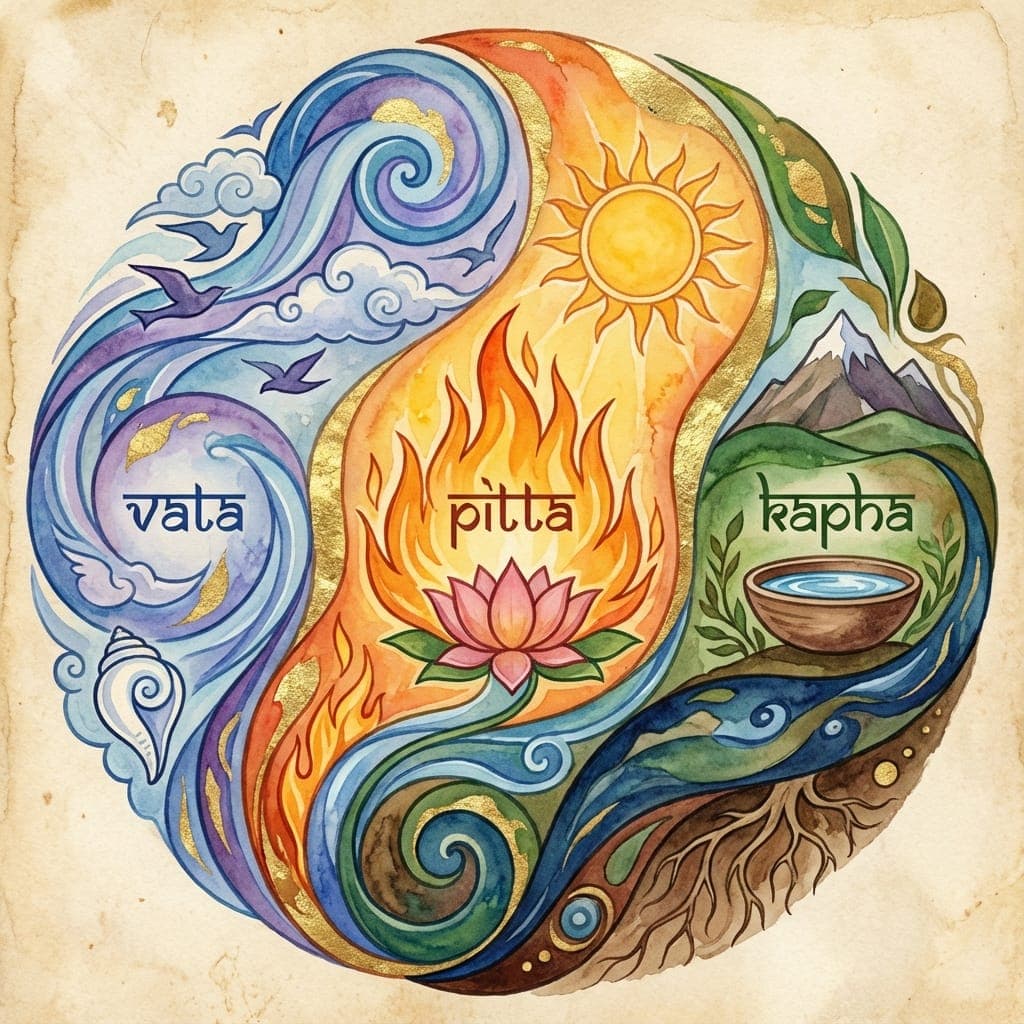
The 3 Doshas: Vata (air+space), Pitta (fire+water), Kapha (earth+water).
Why Generic Health Advice Fails
Modern medicine gives everyone the same advice. Ayurveda recognizes bio-individuality. Example: Salads cool and energize Pitta types but create gas and anxiety in Vata types. One person's medicine is another's poison.
Detailed Dosha Characteristics
| Feature | Vata | Pitta | Kapha |
|---|---|---|---|
| Body Type | Thin, light, hard to gain weight | Medium build, athletic | Heavy, solid, gains weight easily |
| Personality | Creative, anxious, restless | Sharp, focused, irritable | Calm, slow, stable |
| Digestion | Irregular, gas, bloating | Strong, hungry often, acidic | Slow, feels heavy after eating |
| Sleep | Light, insomnia | Moderate, dreams a lot | Deep, heavy, hard to wake |
| Disease Tendency | Anxiety, constipation, arthritis | Acidity, inflammation, anger issues | Diabetes, obesity, depression |
Prakriti vs. Vikriti: Born This Way vs. Current Imbalance
Prakriti: Your birth constitution—never changes.
Vikriti: Your current imbalance (due to lifestyle, season, stress).
Treatment aims to bring Vikriti back to Prakriti (your natural state of balance).
Balancing Each Dosha: Practical Guidelines
Balancing Vata (Reduce Cold, Dry, Irregular)
Diet: Warm, oily, grounding foods. Cooked vegetables, ghee, nuts, warm milk.
Lifestyle: Routine, abhyanga (oil massage), warm baths, early sleep.
Balancing Pitta (Reduce Heat, Intensity, Acidity)
Diet: Cooling foods. Cucumber, coconut, sweet fruits, ghee, milk.
Lifestyle: Avoid midday sun, practice cooling pranayama, reduce competitive activities.
Balancing Kapha (Reduce Heavy, Sluggish, Damp)
Diet: Light, warm, spicy foods. Reduce dairy, sugar, heavy grains.
Lifestyle: Vigorous exercise, wake early, avoid daytime sleep.
Taking the Full Dosha Quiz
A comprehensive Dosha assessment considers 25-30 factors including body type, digestion, temperament, sleep patterns, and disease tendencies. For accurate results, consult an Ayurvedic practitioner who can assess your symptoms, digestive fire, lifestyle, and tongue characteristics.
Scientific Backing
1. Genomic Studies: Research shows Dosha types correlate with genetic variations in metabolism and disease susceptibility.
2. Personalized Medicine: Modern medicine is moving toward precision health—exactly what Ayurveda has practiced for 5000 years.
Final Wisdom: Knowing your Dosha is the first step to personalized health. Once you understand your constitution, you can make informed decisions about diet, exercise, sleep, and lifestyle that work FOR your body, not against it. This is the essence of preventive medicine.
This proverb defines Ayurveda.There is no "Good Diet" for everyone.There is only the right diet for ** Your Dosha **. The 3 Doshas are the biological energies found throughout the human body and mind.💨 Vata(Air + Ether)
"The Mover"
- Body: Thin frame, dry skin, cold hands/feet, prominent joints.
- Digestion: Irregular. Sometimes hungry, sometimes not. Gas/Bloating is common.
- Mind: Creative, quick learner, but forgets easily. Prone to anxiety and fear.
- Power Superfood: Ghee, Sweet Potato, Warm Soups.
- Kryptonite: Raw salads, Popcorn, Cold water.
🔥 Pitta(Fire + Water)
"The Transformer"
- Body: Medium build, sensitive reddish skin, warm body temp.
- Digestion: Sharp. "Hangry" if meals are missed. prone to acidity/loose stools.
- Mind: Sharp intellect, focused, ambitious. Prone to anger and jealousy.
- Power Superfood: Coconut, Cucumber, Mint, Ghee.
- Kryptonite: Chili, Alcohol, Fried food.
⛰️ Kapha(Earth + Water)
"The Preserver"
- Body: Solid build, thick hair, large eyes, smooth skin. Gains weight easily.
- Digestion: Slow. Can skip meals easily. Prone to heaviness/lethargy.
- Mind: Calm, loving, loyal, excellent memory. Prone to attachment and depression.
- Power Superfood: Ginger, Black Pepper, Honey, Millets.
- Kryptonite: Dairy, Sweets, Cold drinks.
Why It Matters
If a ** Kapha ** person eats a heavy cheesy pasta, they will sleep for 3 hours. If a ** Vata ** person eats the same pasta, they will feel grounded and energetic. Knowing your Dosha stops you from fighting your own biology.
The 20-Point Dosha Self-Assessment
Read the statements below. Count how many apply to you in each category. The highest score is your dominant Dosha (Prakriti).
Vata (Air/Space) Score:
- I have a thin, light frame and don't gain weight easily.
- My skin is dry and cold to touch.
- I talk fast and walk fast.
- My sleep is light and interrupted.
- I worry or get anxious easily.
- My digestion is irregular (gas/constipation).
- I hate cold weather.
Pitta (Fire/Water) Score:
- I have a medium build and good muscle tone.
- My skin is sensitive, reddish, or prone to acne/moles.
- I am ambitious, focused, and competitive.
- I get angry or irritable when hungry ("Hangry").
- My digestion is strong/sharp (intense hunger).
- I cannot tolerate hot weather.
- I am a perfectionist.
Kapha (Earth/Water) Score:
- I have a large, solid frame and gain weight easily.
- My skin is smooth, oily, and thick.
- I am calm, patient, and slow to anger.
- I have slow digestion and can skip a meal easily.
- I sleep deeply and struggle to wake up.
- I dislike damp/cold weather.
- I am sentimental and hold onto memories/things.
Dual Doshas: Are You Vata-Pitta?
Most people are not mono-dosha. You likely have a mix.
Vata-Pitta: Creative but ambitious. Prone to burnout.
Pitta-Kapha: Strong leader, stable energy. Prone to stubbornness/weight gain.
Vata-Kapha: Cold constitution. Needs warmth. Alternates between anxiety and lethargy.
How to Live for Your Dosha
| Activity | Vata Tip | Pitta Tip | Kapha Tip |
|---|---|---|---|
| Exercise | Gentle Yoga, Walking | Swimming, Hiking | HIIT, Running (Sweat!) |
| Food Tastes | Sweet, Sour, Salty | Sweet, Bitter, Astringent | Pungent, Bitter, Astringent |
| Sleep | Early (9:30 PM), Warm milk | By 10:30 PM, Cool room | Wake up by 6 AM (No naps!) |
Vikriti vs Prakriti: The Game Changer
Many people get confused because their quiz results change.
Prakriti: Your constitution at conception (DNA). Permanent.
Vikriti: Your current state of imbalance. Temporary.
Example: You are naturally Kapha (calm, heavy) but currently have Vata imbalance (anxiety, bloating) due to stress.
Rule: Always treat the Vikriti (imbalance) first. Once the symptoms clear, eat for your Prakriti to stay balanced.
Ayurvedic Psychology (Manas Prakriti)
Your mind has its own Doshas (Gunas):
- Sattva (Purity/Balance): Clarity, compassion, peace. The goal of Yoga/Ayurveda is to increase Sattva.
- Rajas (Action/Passion): Ambition, restlessness, desire. Essential for work but leads to burnout. (Associated with Vata/Pitta).
- Tamas (Inertia/Ignorance): Lethargy, depression, confusion. Essential for sleep but causes stagnation. (Associated with Kapha).
Career by Dosha
Vata Careers
Artists, writers, speakers, travelers. They need variety and creativity. They hate routine.
Pitta Careers
CEOs, lawyers, surgeons, engineers. They need challenges, logic, and leadership roles. They hate inefficiency.
Kapha Careers
Teachers, nurses, counselors, administrators. They need stability and connection. They hate high-pressure fast-paced chaos.
The Ultimate Food Chart for Your Dosha
| Category | Vata (Eat Warm/Oily) | Pitta (Eat Cool/Dry) | Kapha (Eat Light/Spicy) |
|---|---|---|---|
| Grains | Rice, Oats, Wheat | Barley, Rice, Oats | Millet, Quinoa, Barley |
| Fruits | Sweet berries, Bananas | Grapes, Melon, Pears | Apples, Pomegranates |
| Vegetables | Cooked Carrots, Beets | Leafy Greens, Cucumber | Spicy Greens, Broccoli |
| Spices | Ginger, Cinnamon | Fennel, Coriander | Black Pepper, Chili |
Conclusion: Embrace Your Uniqueness
There is no "good" or "bad" Dosha. Each has superpowers. Vata has creativity, Pitta has leadership, Kapha has endurance. The key is balance. Use this guide to navigate back to your center.
Bonus Chapter: Doshas in Relationships
Understanding your partner's Dosha can save your marriage.
Vata Partner: They are spontaneous, forgetful, and anxious.
How to love them: Give them security. Remind them to eat. Don't yell (it scatters them).
Pitta Partner: They are organized, critical, and fiery.
How to love them: Give them respect. Let them lead. Don't criticize them publicly (it ignites their ego). Feed them on time!
Kapha Partner: They are loyal, slow, and stubborn.
How to love them: Motivate them. Push them gently to go out. Don't rush them (they hate hurry).
Dosha Seasons of Life
Life itself has 3 stages:
Childhood (Kapha): 0-16 years. Growth, mucus, sweetness. (That's why kids love sugar and get colds).
Adulthood (Pitta): 16-50 years. Ambition, hormones, heat. (Acne, ulcers, heart attacks occur here).
Old Age (Vata): 50+ years. Dryness, lightness, wisdom. (Wrinkles, arthritis, memory loss).
knowing this helps you accept aging. You are just entering the "Vata" phase. Embrace the wisdom, manage the dryness.
Doshas in Children: A Parenting Guide
Recognizing your child's Dosha can stop tantrums before they start.
The Vata Child: Creative, restless, forgets to eat, anxious in new places.
Parenting Tip: Routine helps them survive. Give them warm, heavy food. Massage their feet at night to stop nightmares.
The Pitta Child: Intelligent, sharp leader, gets "hangry", reddish skin.
Parenting Tip: Do not engage in power struggles. Appeal to their logic. Feed them cooling foods (melon, cucumber).
The Kapha Child: Sweet, slow, sleeps a lot, prone to congestion.
Parenting Tip: Encourage movement/sports. Limit sweets. They need stimulation to avoid lethargy.
Seasonal Affective Disorder (SAD) and Doshas
Winter depression is actually "Kapha Accumulation" in the mind. The darkness increases Tamas (inertia).
The Fix:
1. Light Therapy: Sit in morning sun (or full spectrum light) for 20 mins. This burns Kapha.
2. Spicy Scents: Diffuse Cinnamon, Clove, or Eucalyptus. Do not use Lavender (it is too sedating).
3. Vigorous Yoga: Sun Salutations (Surya Namaskar) fast-paced to generate heat.
Ayurvedic Glossary for Doshas
- Sattva: Purity, clarity, light. The goal of Yoga.
- Rajas: Activity, passion, turbulence.
- Tamas: Inertia, darkness, dullness.
- Sama Agni: Balanced digestive fire (Healthy).
- Vishama Agni: Irregular fire (Vata). Gas/Bloating.
- Tikshna Agni: Sharp fire (Pitta). Acid/Burn.
- Manda Agni: Slow fire (Kapha). Heaviness/Lethargy.
- Koshta: The nature of your bowel movements.
- Vata: Air + Ether. Principles of movement.
- Pitta: Fire + Water. Principles of transformation.
- Kapha: Earth + Water. Principles of structure.
- Prakriti: Your constitution at birth (DNA). Unchanging.
- Vikriti: Your current state of imbalance. Changing.
- Gunas: Qualities (e.g., Heavy, Light, Cold, Hot). Treatment is applying the "Opposite Guna".
5. Can my Dosha change?
Your Prakriti (DNA) never changes. Your Vikriti (Imbalance) changes daily. The goal is to bring Vikriti back to Prakriti.
4. How often should I take this quiz?
Take it once every season (3 months). Your Vikriti shifts with the weather, and your diet should shift with it.
Frequently Asked Questions
1. Can my Dosha change?
Your birth Dosha (Prakriti) never changes—it's your DNA. However, your current imbalance (Vikriti) changes constantly with stress, season, and diet. We treat the Vikriti to uncover the Prakriti.
2. What if I have equal scores for all three?
This is rare and called "Tridoshic." It indicates excellent health potential and balance, but it also means you must be careful not to upset any one dosha, as you are sensitive to everything.
3. I have Vata mind but Kapha body. What do I eat?
Eat to pacify the Dosha that is causing the major problem right now (usually Vata). Or follow a "Tridoshic" diet (like Kitchari/vegetables) that aggravates no one.
Final Words
Accept your nature.Don't try to be skinny if you are Kapha. Don't try to be calm if you are Vata(just channel the energy).Balance is the key.
Know thyself,
Dr.Arti Singh, BAMS
Looking for Individualized Guidance?
Because Ayurveda is highly personalized to your unique body type (Prakriti) and specific Dosha imbalance, generic advice can only go so far. If you want a tailored protocol, you can schedule a private video consultation with Dr. Arti Singh.
Book Video ConsultationScientific References & Citations
Our content relies on classical clinical texts, academic research databases, and peer-reviewed studies to ensure clinical accuracy.
- World Health Organization (WHO). (2019). WHO Benchmarks for Training in Ayurveda. Geneva: World Health Organization.
- National Center for Complementary and Integrative Health (NCCIH). (2023). Ayurvedic Medicine: In Depth. U.S. Department of Health and Human Services.
- Agnivesha. (2018). Charaka Samhita. (T. Acharya, Ed.). Varanasi: Chaukhambha Sanskrit Sansthan (Original work compiled circa 1000 BCE).
- Sushruta. (2017). Sushruta Samhita. (P. V. Sharma, Trans.). Varanasi: Chaukhambha Visvabharti (Original work compiled circa 600 BCE).
- Central Council for Research in Ayurvedic Sciences (CCRAS). (2020). Journal of Research in Ayurvedic Sciences (JRAS). New Delhi: Ministry of AYUSH, Government of India.
Reviewed by Dr. Arti Singh
B.A.M.S. (Ayurvedacharya) • Reg. No: 4200 (Bihar)
Dr. Arti Singh is a licensed Ayurvedic physician specializing in women's health, PCOS, and hormonal disorders. With a focus on evidence-based Ayurveda, she combines ancient clinical texts (Charaka Samhita) with modern diagnostic understanding to help patients achieve remission naturally.
View Full Credentials