Delivery Ke Baad Kya Kare? Ayurvedic Post-Partum Care (First 40 Days)
✅ The Short Answer:
The first 40 days post-delivery (Sutika Kala) are the most critical in Ayurveda — your body's Vata is maximally aggravated from the 'empty space' left by the baby. The protocol: Dashamoola Kwatha decoction cleans the uterus, Shatavari increases breast milk, warm sesame oil Abhyanga daily restores tissue, and a strict warm, liquid diet of Khichdi with ghee rebuilds Agni. Complete rest, no cold water, no raw foods, and belly binding. Following Sutika Paricharya prevents lifelong hormonal issues.
— Dr. Arti Singh (BAMS)
Medically Reviewed by Dr. Arti Singh (B.A.M.S.) | Last Updated: February 4, 2026 | Next Review Date: July 2027
Educational Purpose: The information in this article is written for educational and general information purposes only. It is not intended to be a substitute for professional medical advice, diagnosis, or treatment. Always consult a certified B.A.M.S. Ayurvedic physician or your primary healthcare provider before starting any herbal regimen, especially if you are currently taking hormonal or prescription medication.
"Everyone brings gifts for the baby. No one asks about the mother."
Birth is a miraculous event, but it is also one of the most physically violent acts the human body endures. A life has exited your body, leaving behind a void—both physical and energetic.
In Ayurveda, we say that after delivery, the mother has "one foot in this world and one foot in the other." She is open, vulnerable, and depleted. If she is not cared for in the first 45 days (Sutika Kaal), she may suffer from back pain, joint issues, digestive ruin, and fatigue for the next 40 years.
Why Everyone Needs 'Sutika Paricharya'
The "Vata" Explosion: Physiologically, childbirth creates a massive Empty Space (Vata) in the womb (Garbhashaya) where the baby used to be. The fluids are lost. The blood is lost. The energy is spent.
Because Vata is cold, dry, mobile, and erratic, the new mother feels:
- Shivering/Cold: Deep internal coldness (she needs sweaters even in summer).
- Anxiety: A racing mind, fear, and tears (Postpartum Blues).
- Emptiness: A physical feeling of hollowness in the abdomen.
- Constipation: Dryness in the colon is immediate.
The goal of Sutika Paricharya is simple: Fill the Empty Space with Warmth, Oil, and Nourishment.
The 4 Pillars of Postpartum Recovery
1. Diet (Ahara): The Healing Menu
"Can I eat salad?" NO. Your digestive fire (Agni) is nearly extinguished after birth. You CANNOT digest raw salads, cold smoothies, or heavy meats. If you eat heavy food now, it will turn into toxins (Ama) and pass to the baby via breastmilk, causing Colic.
Stage 1: Days 1-10 (Liquids Only)
The goal is to restart digestion gently.
- Peya/Manda: Thin rice gruel tailored with Ghee and Pippali (Long Pepper).
- Harira/Raab: A warm liquid porridge made from wheat flour, lots of Ghee, liquid jaggery, and Ajwain. This provides instant energy without taxing digestion.
- Garlic Milk: Boiled milk with 4 garlic cloves. Helps the uterus contract and expel lochia (bleeding).
Stage 2: Days 11-20 (Semi-Solids)
Introduce strength-building foods.
- Moong Dal Khichdi: Very soft, cooked with plenty of Ghee.
- Gond (Edible Gum) Ladoo: The best medicine for strengthening the pelvic bones and back. (Recipe below).
- Methi (Fenugreek) Ladoo: For cleansing the uterus and boosting milk supply. Note: It is bitter but essential.
The "No" List: Foods to Avoid (Apathya)
Eating these will immediately cause gas in the baby:
- Gas-forming Vegetables: Cauliflower, Cabbage, Broccoli, Potato, Peas, Eggplant. (Vata aggravating).
- Heavy Pulses: Rajma (Kidney beans), Chana (Chickpeas), Urad Dal. (Only Moong is allowed).
- Cold Items: Ice cream, cold water, raw juices, curd/yogurt at night.
- Sour/Fermented: Idli/Dosa batter (if sour), pickles, old leftovers.
Superfoods to Embrace
- Dill Leaves (Suva Bhaji): Increases milk and prevents colic.
- Ridge Gourd (Turai) & Bottle Gourd (Lauki): Easy to digest and hydrating.
- Ghee: The most important lubricant for your dry joints. Don't fear the fat; you need it for hormones.
2. Abhyanga (Oil Massage) & Bath
This is not a luxury spa treatment. It is medical necessity.
Every single day, the mother must be massaged with warm Dhanwantharam Thailam or Sesame Oil. Use upward strokes. Oil must be soaked into the scalp (Shiro Abhyanga) to prevent Postpartum Hair Fall. This calms the Vata in the nervous system and repairs the stretched skin.
The Bath (Vedana Shamana): Following the massage, she should bathe in hot water boiled with Nirgundi or Tamarind leaves. This hot herbal water relieves deep body aches and prevents infection in the perineal area.
3. Udaravestana (Belly Binding)
After the 4th or 5th day (for normal delivery; wait 2 weeks for C-Section), the abdomen should be tightly wrapped with a long cotton cloth (sari style) or a belly band.
Why Bind? Imagine a balloon that was inflated for 9 months and suddenly deflated. It leaves behind loose, flabby skin and space filled with Air (Vata). Binding physically compresses this Vata, guiding the uterus back to its original size (Involution) and stabilizing the lower back.
How to Bind (Udaravestana)
- The Material: Use a cotton sari or a long muslin cloth (approx 5-6 meters). Modern velcro belts are okay but rigid; cloth contours better.
- Timing: Start from Day 4 (normal delivery) or Day 15 (C-section). Bind after your bath.
- Technique: Wrap snuggly from the hips up to the ribs. It should feel like a firm hug, not a corset. You should be able to breathe deeply.
- Duration: Keep it on for 6-8 hours/day, especially while walking or nursing. Remove while sleeping.
4. Rest & Isolation
In tradition, the mother does not leave her room/home for 40 days. Modern women think this is "jail." It is actually "protection." Her immunity is low. Her baby's immunity is zero. Protection from wind, sun, noise, and crowds is essential. "Sleep when the baby sleeps" is real advice. Sleep builds Ojas.
The Medicinal Recipes (Cook at Home)
1. Gond Ladoo (Edible Gum Balls)
- Ingredients: Gond (Edible gum crystals), Whole Wheat Flour, Ghee (Lots of it), Jaggery, Almonds, Cashews.
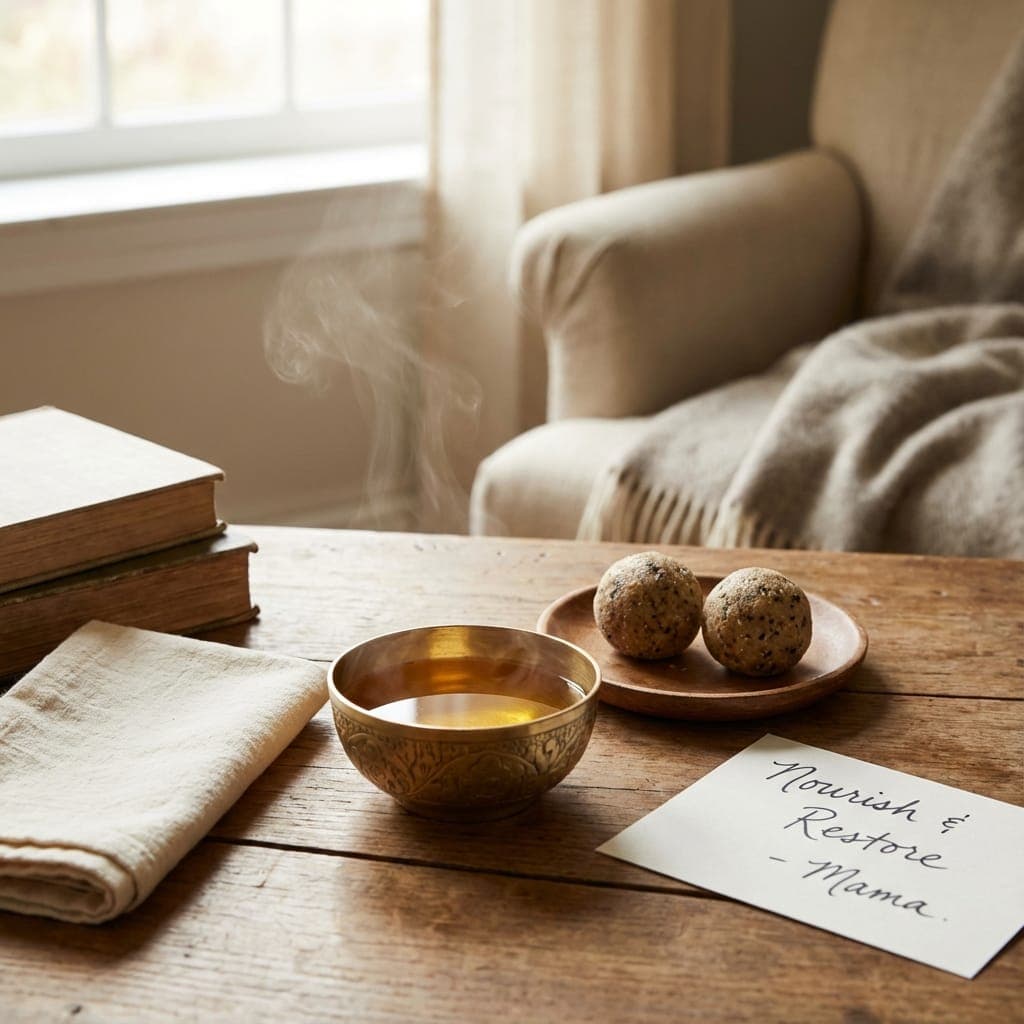
- Method: Fry the Gond crystals in ghee until they puff up like popcorn. Crush them. Roast the flour in ghee until brown. Melt jaggery. Mix everything. Roll into balls.
- Dose: 1 Ladoo every morning with warm milk. This is for your bones.
2. Ajwain Water (Vata Water)
- Recipe: Boil 1 liter water with 1 tbsp Ajwain (Carom seeds). Reduce to half.
- Benefit: Prevents gas in mother, prevents colic in baby. Cleans the uterus.
The First 10 Days: A Day-by-Day Diary
The first 10 days are critical. Here is a typical routine I prescribe:
Days 1-3: Total Rest
Lying down only. Only get up to use the bathroom. Baby is brought to you for feeding. Food is liquid (Peya). Massage is very gentle.
Days 4-7: Bonding & Binding
Start Belly Binding. Digestion improves slightly—add thin Moong Dal soup. Emotional sensitivity peaks (Day 5 Blues); keep support close.
Days 8-10: Transitions
Start gentle sitting. Add Ghee and semi-solids. First proper hair wash with herbal water. Baby's umbilical stump usually falls off.
Grandmother's Secrets (Dadi Ke Nuskhe)
These aren't in textbooks, but they work:
- Cotton in Ears: Always keep ears covered with cotton or a scarf. Vata enters through the ears, traversing directly to the uterus, causing pain.
- No Overhead Fans: Direct wind is the enemy. It causes joint stiffness.
- Betel Leaf (Paan) for Milk: Applying warm Betel leaves with oil on breasts can reduce engorgement pain.
- Look at the Lamp: Staring at a ghee lamp (Trataka) calms the restless postpartum mind and improves eyesight which often weakens after birth.
The Emotional Rollercoaster: Baby Blues vs. PPD
In Ayurveda, the mind (Manas) is intimately connected to the body. The explosion of Vata (Air element) makes the mind erratic, anxious, and ungrounded.
Why am I crying?
It is not "weakness." It is Vata seeking stability. Crying releases pent-up Vata. Allow it. However, if sadness persists beyond 2 weeks, disrupts sleep, or involves thoughts of harm, it is no longer just "Vata imbalance"—it is a medical emergency requiring professional help.
Ayurvedic Support for the Mind
- Brahmi Tea: A non-sedative nervine tonic that improves clarity.
- Mantra Chanting: The vibration of "Om" or "So-Hum" physically stimulates the Vagus Nerve, engaging the parasympathetic nervous system (Rest & Digest).
- Foot Massage (Pada Abhyanga): Rubbing ghee on the soles of the feet at night pulls heat from the eyes and head, inducing deep sleep.
A Note for the Partner (The Pillar)
Sutika Paricharya is not a solo journey. The father's role is to be the Gatekeeper. Your job is to keep unhelpful guests away, ensure warm food appears magically, and hold the baby when mom needs to bathe or eat. You are the container that holds the mother, so she can hold the baby.
Herbal Support for New Moms
- Dashamoolarishta: The ultimate tonic (fermented decoction of 10 roots). It reduces inflammation, restores energy, and prevents postpartum fever. I recommend this to almost every new mother for 3 months (15ml mixed with warm water).
- Shatavari: For regulating hormones and increasing breast milk quantity (Galactagogue).
- Jeera (Cumin) Water: Crucial for keeping the uterus clean and digestion moving.
- Saubhagya Shunthi Pak: A ginger-based jam for recovery.
Baby Care (Balabhyanga)
The baby also needs daily oil massage. Use gentle oils like Virgin Coconut Oil or specialized Lakshadi Thailam. Massage strengthens the baby's bones and sleep patterns. Sunlight exposure (mild morning sun) is vital for Vitamin D and preventing jaundice.
Frequently Asked Questions
Q: Can I drink normal water?
A: NO. For 40 days, drink only warm/hot water. Cold water will freeze your digestion and cause infant colic via breastmilk. Use a thermos and keep sipping.
Q: When can I start exercising?
A: Wait for 6 weeks. Your ligaments are loose due to the hormone Relaxin. Heavy exercise or running can cause uterine prolapse. Walking is fine after 3 weeks.
Q: I have no milk. What to do?
A: Stress stops milk (Oxytocin inhibition). Rest. Eat Methi Ladoo. Drink Shatavari Kalpa with milk. And feed on demand.
Q: When is it safe to resume intimacy?
A: Ayurveda and modern medicine agree: Wait at least 6 weeks. The uterus needs to heal, and the cervix needs to close. Ensure bleeding (lochia) has completely stopped. Proceed gently, using plenty of lubrication (oil/ghee), as low estrogen can cause dryness.
Q: How do I lose the postpartum belly fat?
A: Do NOT diet. Breastfeeding burns 500 calories a day. Belly binding (Udaravestana) helps reshape the muscles physically. Eating warm, nourishing fats (Ghee) actually speeds up metabolism compared to cold salads which slow it down. The weight will go naturally if digestion is strong.
Q: Can I use the Air Conditioner?
A: Direct cold drafts are dangerous for Vata. If you must use AC, keep it at a moderate temperature (24-26°C), cover your ears, and wear socks. Never let cold air blow directly on you or the baby.
Q: When can I travel with my baby?
A: Ancient wisdom forbids travel for the first 40 days (and ideally 3 months). Why? Travel involves movement (Vata). Your body is already destabilized. The baby's spine is not yet strong, and their immune system is zero. Stay in your "Sutika Chamber" (Home). Let the world come to you; do not go to the world.
Final Words from a Doctor (and a Mother)
Society pushes women to "bounce back" instantly. To fit into pre-pregnancy jeans in 2 weeks. This is violence against women. Ayurveda asks you to slow down. You cannot pour from an empty cup. Let the village (or your family) take care of you, so you can have the strength to take care of your little one. If you rest now for 40 days, you will be healthy for 40 years.
Heal the mother,
Dr. Arti Singh, BAMS
Looking for Individualized Guidance?
Because Ayurveda is highly personalized to your unique body type (Prakriti) and specific Dosha imbalance, generic advice can only go so far. If you want a tailored protocol, you can schedule a private video consultation with Dr. Arti Singh.
Book Video ConsultationScientific References & Citations
Our content relies on classical clinical texts, academic research databases, and peer-reviewed studies to ensure clinical accuracy.
- World Health Organization (WHO). (2019). WHO Benchmarks for Training in Ayurveda. Geneva: World Health Organization.
- National Center for Complementary and Integrative Health (NCCIH). (2023). Ayurvedic Medicine: In Depth. U.S. Department of Health and Human Services.
- Agnivesha. (2018). Charaka Samhita. (T. Acharya, Ed.). Varanasi: Chaukhambha Sanskrit Sansthan (Original work compiled circa 1000 BCE).
- Sushruta. (2017). Sushruta Samhita. (P. V. Sharma, Trans.). Varanasi: Chaukhambha Visvabharti (Original work compiled circa 600 BCE).
- Central Council for Research in Ayurvedic Sciences (CCRAS). (2020). Journal of Research in Ayurvedic Sciences (JRAS). New Delhi: Ministry of AYUSH, Government of India.
Reviewed by Dr. Arti Singh
B.A.M.S. (Ayurvedacharya) • Reg. No: 4200 (Bihar)
Dr. Arti Singh is a licensed Ayurvedic physician specializing in women's health, PCOS, and hormonal disorders. With a focus on evidence-based Ayurveda, she combines ancient clinical texts (Charaka Samhita) with modern diagnostic understanding to help patients achieve remission naturally.
View Full Credentials