IBS & Bloating Ka Ayurvedic Ilaj: Stop Gas & Indigestion Permanently
✅ The Short Answer:
IBS (Grahani Roga) in Ayurveda is caused by weakened Agni (digestive fire) that alternates between hyperactive and sluggish states, causing the bloating-diarrhea-constipation cycle. The cornerstone treatment is Takrarishta (medicated buttermilk) to rebuild gut flora, Hingvashtaka Churna before meals to regulate Vata movement, and strict meal timing — eating only when the previous meal is fully digested. Most IBS patients see 70-80% symptom reduction within 6-8 weeks.
— Dr. Arti Singh (BAMS)
Medically Reviewed by Dr. Arti Singh (B.A.M.S.) | Last Updated: January 21, 2026 | Next Review Date: July 2027
Educational Purpose: The information in this article is written for educational and general information purposes only. It is not intended to be a substitute for professional medical advice, diagnosis, or treatment. Always consult a certified B.A.M.S. Ayurvedic physician or your primary healthcare provider before starting any herbal regimen, especially if you are currently taking hormonal or prescription medication.
"Doctor, I know exactly where every bathroom is in this city."
Irritable Bowel Syndrome(IBS) is a condition of anxiety—not just in the mind, but in the gut.The gut doesn't know whether to hold the food or let it go. One day it's constipation, the next day it's loose motions.
Ayurvedic View: Grahani Dosha
The Grahani is the seat of Agni (Digestive Fire), located in the duodenum. Its job is to hold food until it is fully digested, and then release it(Vivechana) into the colon.
In IBS, this "holding" mechanism is damaged.Food passes through too quickly(Diarrhea) or gets stuck(Constipation).
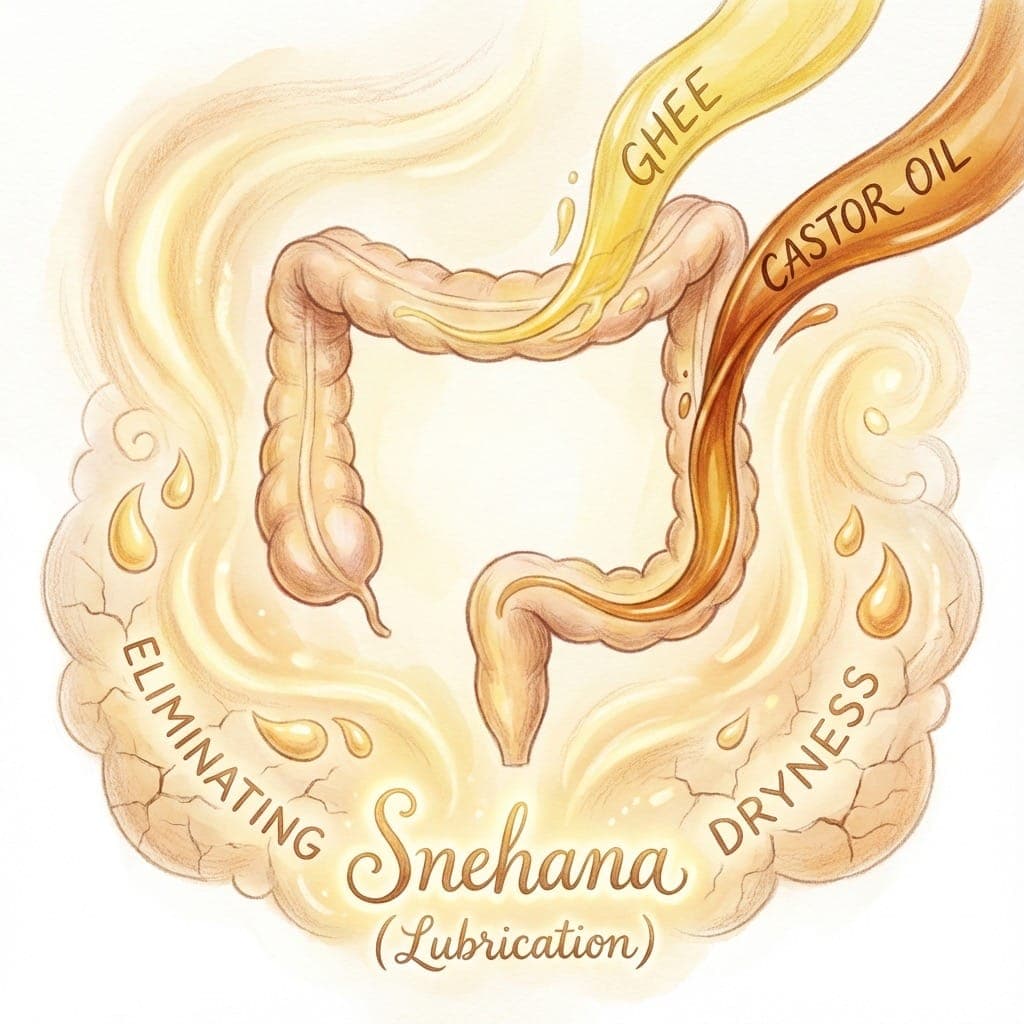
- Vata Grahani: Bloating, gas, dry constipation, anxiety, noise in stomach (Borgborygmus).
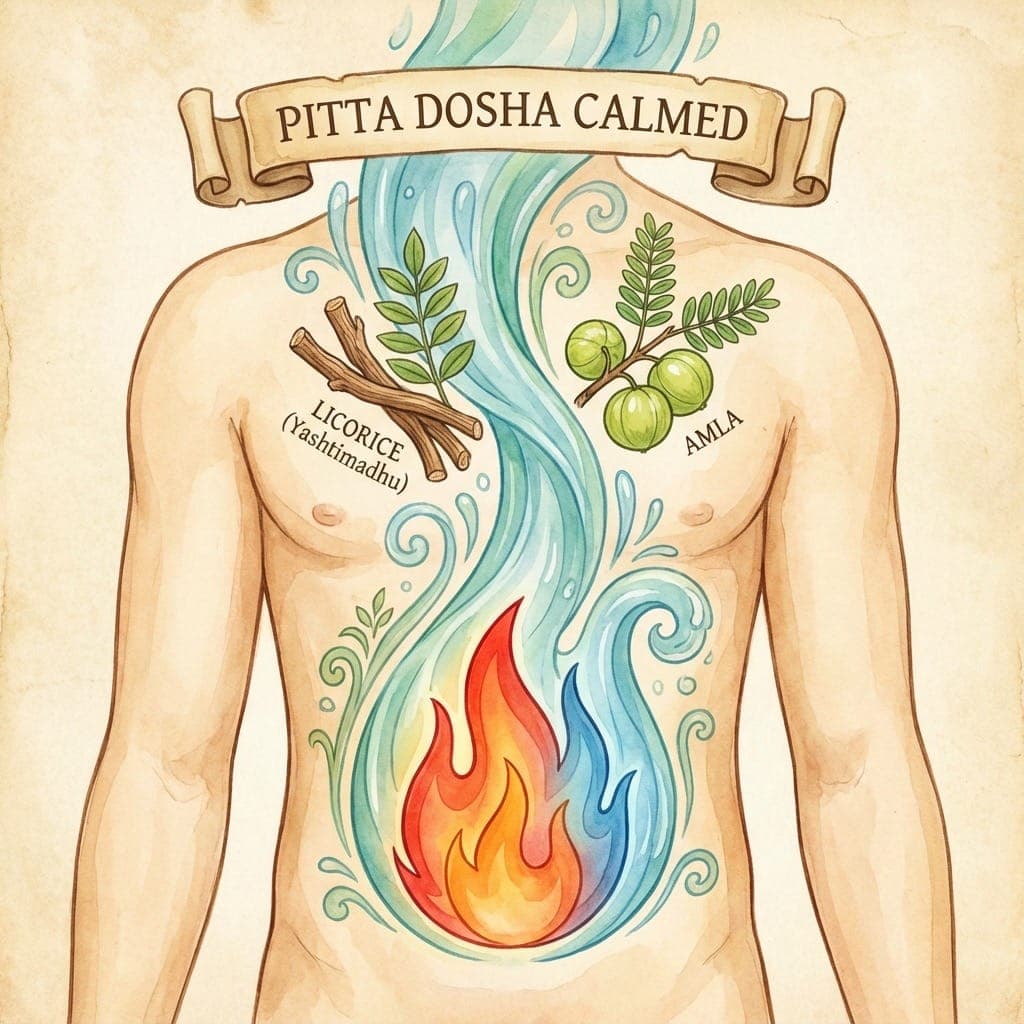
- Pitta Grahani: Burning sensation, loose yellow stools, acidity, perfectionist personality.
- Kapha Grahani: Mucus in stool, heavy feeling, nausea, sluggishness.
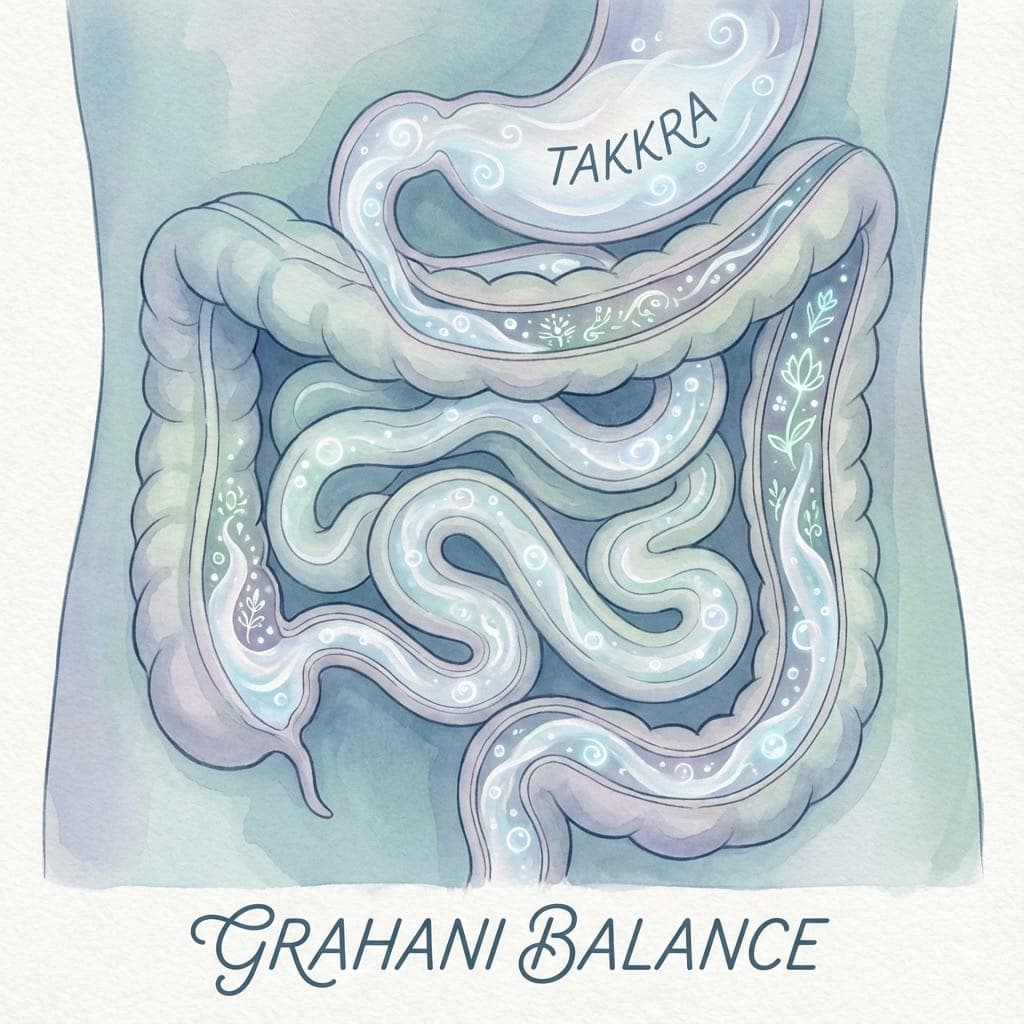
The Key Therapy: Takra(Medicinal Buttermilk)
"He who drinks Takra daily never suffers from diseases." — Bhavaprakasha Nighantu.
Takra is not just yogurt. Yogurt is heavy and clogs the channels (Abhishyandi). Takra is yogurt churned with water (1:4 ratio) and spices. It is light, astringent, and contains natural lactobacillus. It heals the inflamed mucosal lining of the gut like nothing else.
The Ayurvedic Takra Recipe(For IBS)
- Take 2 tablespoons of fresh homemade Curd(Yogurt).
- Add 1 big glass of Water.
- Churn well (whisk/blend) for 2 minutes to separate the fats(butter).Remove the butter if digestion is very weak.
- Add a pinch of Roasted Cumin(Jeera) + Black Salt + dried Curry Leaves.
- Drink after lunch daily.
Specific Herbs for IBS
1. Bilva(Bael Fruit)
Unripe Bael fruit is a bowel regulator.It stops loose motion but doesn't cause constipation. It strengthens the intestine's "holding power"(Grahana Shakti).
Frequently Asked Questions
1. Is curd (yogurt) good for IBS?
In Ayurveda, plain curd is heavy and clogging (Abhishyandi). However, **fresh buttermilk (Takra)** is the nectar for IBS. It contains probiotics but is light and digestive. Always dilute yogurt with water (1:4 ratio) and add cumin/ginger.
2. Can I eat raw salads if I have IBS?
No. Raw vegetables are cold, rough, and hard to digest—everything that aggravates Vata and irritable bowel. Steam or cook your vegetables well with soothing spices like cumin and fennel.
3. How long does it take to heal IBS with Ayurveda?
Functional disorders like IBS take time to reverse. With strict diet and herbs (Kutaj, Bilva), symptoms often improve in 3-4 weeks. Complete healing of the Grahani (gut lining) typically takes 3-6 months.
2. Kutaj(Holarrhena)
For IBS - D(Diarrhea dominant), Kutaj is the most potent astringent herb(Stambhana).It stops the frequency immediately and kills the bad bacteria(Krimighna).
The "No-Raw" Rule
If you have IBS, ** Raw Salads are Poison.**
Raw vegetables are cold, rough, and hard to digest(Vata increasing).They will instantly cause gas and bloating.Always eat cooked, warm, mushy food(like Kitchari or Stews) to soothe the irritated gut lining.
Gut - Brain Axis
Ayurveda knew the gut is the "Second Brain." Stress directly impacts Agni.Practicing ** Pranayama ** (Deep Breathing) before meals shifts your body from "Fight or Flight" to "Rest and Digest" mode.
Final Words
Support Resources: Consider joining an IBS support group (online or local) where you can share experiences and coping strategies with others who truly understand what you're going through.
A Reminder on Patience: Grahani (IBS) didn't develop overnight—it accumulated over years of stress, poor eating habits, and irregular lifestyle. Healing requires patience. Most patients see significant improvement within 6-8 weeks, but full stabilization takes 3-6 months. Stay consistent with your protocol.
Lifestyle Modifications That Actually Work
Beyond diet and herbs, these lifestyle changes make a significant difference:
- Fixed Sleep Schedule: Sleep by 10 PM, wake by 6 AM. Irregular sleep aggravates Vata dramatically. IBS patients with regular sleep report 30% symptom improvement.
- Daily Movement: 30-minute walk after dinner aids digestion and calms the nervous system. Avoid vigorous exercise (it can aggravate Vata).
- Warm Water Drinking: Sip warm/room temperature water throughout the day. Cold water shocks the digestive system and worsens cramping.
- Avoid Multitasking While Eating: No TV, phone, or work during meals. Eat mindfully—this activates the parasympathetic nervous system (rest-and-digest mode).
- Yoga for IBS: Specific poses like Pawanmuktasana (Wind-Relieving Pose), Balasana (Child's Pose), and Supta Baddha Konasana (Reclining Bound Angle) massage the intestines and reduce cramping.
The Elimination Diet: Identifying Your Triggers
While Ayurveda has general guidelines, each person's triggers are unique. Use this systematic approach:
4-Week Elimination Protocol:
- Week 1-2: Eat ONLY: White rice, moong dal, well-cooked carrots/zucchini, ghee, buttermilk. This is your "safe baseline."
- Week 3: Add one new food at a time (e.g., potato on Day 1, spinach on Day 3). Track symptoms.
- Week 4: Continue adding foods. If a food causes symptoms within 24 hours, eliminate it permanently.
- Result: By the end, you'll have a personalized "safe foods" list based on YOUR body, not generic advice.
Long-Term Management: Can IBS Be Managed?
Honest answer: IBS is a chronic condition, but it can be managed so well that you feel "resolved" most of the time.
With consistent Ayurvedic treatment (diet + herbs + stress management), most patients achieve 70-80% symptom reduction within 3-6 months.
Flare-ups may still occur during extreme stress, travel, or dietary lapses—but they're manageable and short-lived if you return to your protocol immediately.
Final Wisdom: IBS is not "all in your head," but your head does play a major role. The gut and brain are inseparable. When you calm your mind through Pranayama, strengthen your Agni with herbs, and eat in harmony with your Dosha, the intestines follow suit. Give yourself 3 months of dedicated Ayurvedic treatment. Most patients wish they had started sooner.
The Gut-Brain Axis: Why Your Mind Controls Your Bowels
Ever noticed how stress triggers diarrhea before a big exam? Or how anxiety tightens your stomach?
This is the gut-brain axis—a two-way communication highway between your digestive system and your nervous system.
Modern science confirms what Ayurveda knew 5000 years ago: Vata (the nervous energy) directly governs Grahani (the intestinal function).
The Vicious Cycle of IBS:
- Stress/anxiety aggravates Vata
- Aggravated Vata disturbs Agni (digestive fire) and gut motility
- This causes bloating, cramping, irregular bowel movements
- Digestive distress creates more anxiety ("What if I need a bathroom and there isn't one?")
- More anxiety = more Vata = worse IBS
To break this cycle, you must treat both the gut AND the mind.
Understanding Grahani: The "Holding"Power of Your Intestines
In Ayurveda, Grahani refers to the duodenum and small intestine—specifically, its ability to "hold" food for proper digestion.
When Agni (digestive fire) is weak, Grahani loses its holding power. Food passes through too quickly (diarrhea) or too slowly (constipation), with incomplete digestion creating gas and bloating.
The 4 Types of Grahani (IBS Subtypes)
| Type | Dominant Dosha | Symptoms | Treatment Focus |
|---|---|---|---|
| Vataja Grahani | Vata (Air) | Alternating diarrhea/constipation, severe gas, anxiety, dry stool | Calm Vata with warm, oily foods + stress management |
| Pittaja Grahani | Pitta (Fire) | Urgent diarrhea, burning sensation, acid reflux, yellow stool | Cool Pitta with bitter herbs + avoid spicy/sour foods |
| Kaphaja Grahani | Kapha (Water/Earth) | Heaviness, sluggish digestion, mucus in stool, no urgency | Stimulate Agni with pungent spices + reduce dairy |
| Sannipataja | All 3 Doshas | Mixed symptoms, very unpredictable, severe case | Requires personalized Ayurvedic consultation |
The Low-FODMAP Diet vs. Ayurvedic Approach
Modern gastroenterologists recommend the Low-FODMAP diet (avoiding fermentable carbs). While this helps short-term, it's restrictive and doesn't address the root cause.
Ayurveda's approach: Strengthen Agni so you CAN digest these foods, rather than permanently avoiding them.
The Ayurvedic IBS Diet Protocol:
- Eat warm, cooked foods only: No salads, raw vegetables, or cold smoothies (they aggravate Vata and weaken Agni).
- Favor easy-to-digest foods: Moong dal khichdi, white rice, well-cooked vegetables, buttermilk.
- Avoid: Beans (except moong dal), cruciferous vegetables (cabbage, broccoli), dairy (except buttermilk), fried foods.
- Meal timing: Eat at fixed times daily. Erratic eating confuses Grahani.
- Chew thoroughly: Digestion starts in the mouth. Chew each bite 20-30 times.
Top 5 Herbs for IBS (Grahani Chikitsa)
These classical Ayurvedic formulations target Grahani directly:
- Kutajarishta: The gold standard for chronic diarrhea-predominant IBS. Contains Kutaja (Holarrhena antidysenterica), which stops loose motions and heals intestinal inflammation. Dosage: 20ml diluted in water, twice daily after meals.
- Bilvadi Churna: Contains Bilva (Bael fruit), which strengthens Grahani and absorbs excess water in intestines. Excellent for alternating diarrhea/constipation. Dosage: 1 tsp with warm water twice daily.
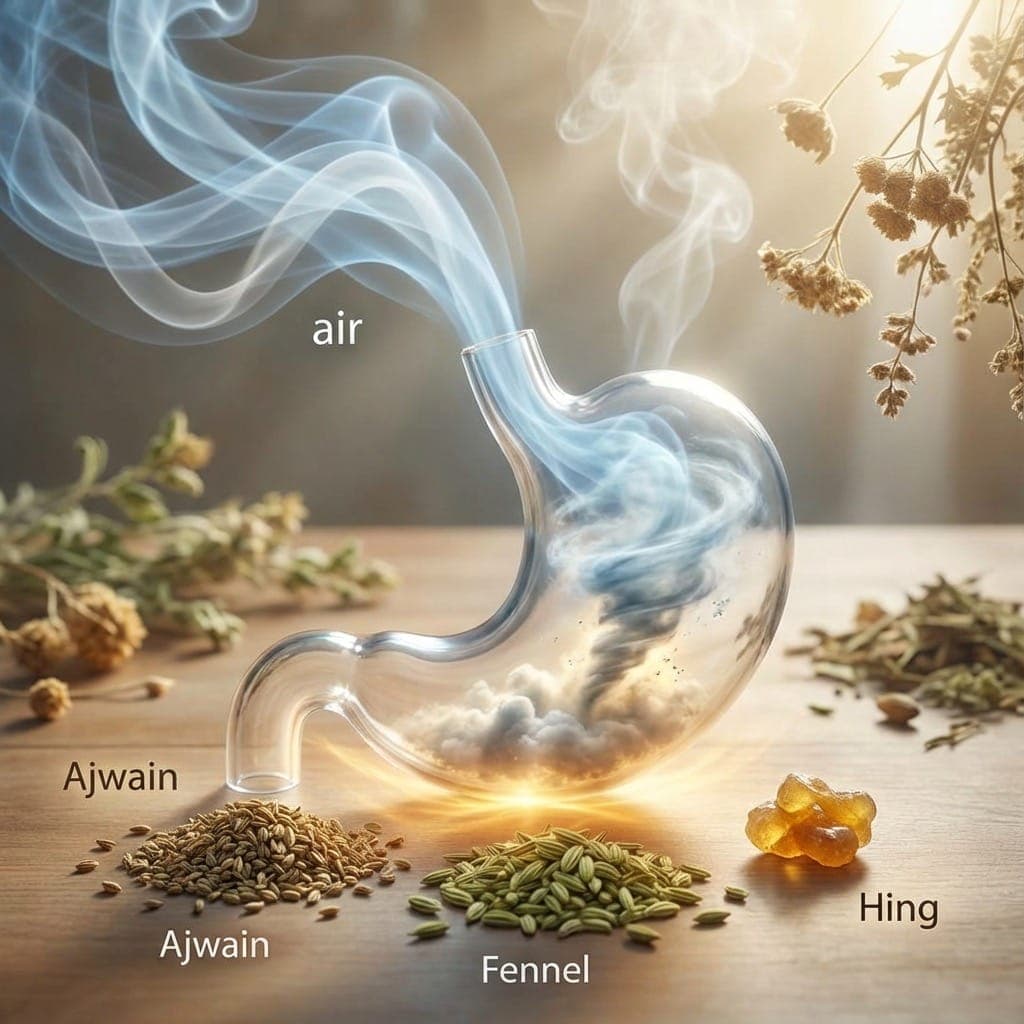
- Hingvashtak Churna: A carminative blend that reduces gas, bloating, and cramping within minutes. Contains Asafoetida (Hing), which is the best Vata-pacifying spice. Dosage: 1/2 tsp with meals.
- Musta (Cyperus rotundus): Regulates intestinal motility. Calms both diarrhea and constipation by balancing Vata. Dosage: 500mg capsule twice daily.
- Triphala: The ultimate bowel regulator. Use only if constipation-predominant IBS. Dosage: 1 tsp powder with warm water before bed.
The Stress Management Protocol (60% of IBS Treatment)
Here's the truth: You can eat perfectly and take all the herbs, but if stress isn't managed, IBS won't heal. Stress is the primary Vata aggravator.
Morning Ritual (Non-Negotiable):
Wake up at the same time daily. Drink warm water. Practice 10 minutes of Anulom Vilom (Alternate Nostril Breathing). This balances the nervous system and calms Vata immediately.
Abhyanga (Self-Oil Massage):
Massage warm sesame oil on your abdomen in clockwise circles for 10 minutes before bathing. This grounds Vata and improves gut motility. Do daily for 30 days—you'll see dramatic improvement.
Ashwagandha for Gut Anxiety:
Take 1 tsp Ashwagandha powder with warm milk at night. It reduces cortisol (stress hormone) and calms the gut-brain axis. IBS patients who take Ashwagandha report 40-50% symptom reduction within 4 weeks.
Probiotics: Do They Work for IBS?
Research shows that specific probiotic strains (Lactobacillus plantarum, Bifidobacterium infantis) reduce IBS symptoms by restoring gut microbiome balance.
Ayurvedic Alternative: Homemade buttermilk (Takra). Mix 1 cup plain yogurt + 2 cups water + pinch of cumin + rock salt. Drink with lunch daily. This provides natural probiotics AND is easier to digest than commercial supplements.
Success Stories: From Constant Bathroom Anxiety to Freedom
Case Study: 29-year-old with Diarrhea-Predominant IBS
Problem: Urgent diarrhea 4-5 times/day, especially after breakfast. Had to plan life around bathroom access. Multiple colonoscopies—all normal. Diagnosed with IBS, told to "manage stress."
Ayurvedic Diagnosis: Vataja Grahani with severe stress-induced Vata aggravation.
Protocol:
- Diet: Switched to warm, cooked foods only. Moong dal khichdi for breakfast (replaced cold cereal).
- Herbs: Kutajarishta + Bilvadi Churna for 3 months.
- Stress Management: Daily Pranayama + Ashwagandha at night.
- Abhyanga: Sesame oil abdominal massage daily.
- Therapy: Started seeing a therapist for work-related anxiety.
Result: After 6 weeks, diarrhea reduced to 1-2 times/day. After 3 months, completely normal bowel movements. Can now eat out without fear.
When to See a Gastroenterologist
While most IBS is functional (no structural damage), certain "red flags" require immediate medical evaluation:
- Blood in stool (could be IBD, colon cancer)
- Unintentional weight loss >5kg
- Symptoms starting after age 50 (higher cancer risk)
- Severe, debilitating pain (not just cramping)
- Fever with diarrhea (indicates infection or IBD)
My Integrative Approach: Get a colonoscopy to rule out IBD (Crohn's, Ulcerative Colitis). Once confirmed as IBS, use Ayurveda as primary treatment. Modern medicine has no effective long-term solution for IBS—Ayurveda does.
Scientific Backing
1. Kutaja (Holarrhena): Studies show it has potent anti-diarrheal properties and reduces intestinal inflammation, making it effective for IBS-D.
2. Ashwagandha & IBS: Research confirms Ashwagandha reduces stress-induced gut dysfunction by lowering cortisol and balancing the gut-brain axis.
Trust your gut, but treat it kindly.Stop experimenting with probiotics and fibers.Return to simplicity—warm buttermilk, cooked food, and peace of mind.
Heal your center,
Dr.Arti Singh, BAMS
Looking for Individualized Guidance?
Because Ayurveda is highly personalized to your unique body type (Prakriti) and specific Dosha imbalance, generic advice can only go so far. If you want a tailored protocol, you can schedule a private video consultation with Dr. Arti Singh.
Book Video ConsultationScientific References & Citations
Our content relies on classical clinical texts, academic research databases, and peer-reviewed studies to ensure clinical accuracy.
- World Health Organization (WHO). (2019). WHO Benchmarks for Training in Ayurveda. Geneva: World Health Organization.
- National Center for Complementary and Integrative Health (NCCIH). (2023). Ayurvedic Medicine: In Depth. U.S. Department of Health and Human Services.
- Agnivesha. (2018). Charaka Samhita. (T. Acharya, Ed.). Varanasi: Chaukhambha Sanskrit Sansthan (Original work compiled circa 1000 BCE).
- Sushruta. (2017). Sushruta Samhita. (P. V. Sharma, Trans.). Varanasi: Chaukhambha Visvabharti (Original work compiled circa 600 BCE).
- Central Council for Research in Ayurvedic Sciences (CCRAS). (2020). Journal of Research in Ayurvedic Sciences (JRAS). New Delhi: Ministry of AYUSH, Government of India.
Reviewed by Dr. Arti Singh
B.A.M.S. (Ayurvedacharya) • Reg. No: 4200 (Bihar)
Dr. Arti Singh is a licensed Ayurvedic physician specializing in women's health, PCOS, and hormonal disorders. With a focus on evidence-based Ayurveda, she combines ancient clinical texts (Charaka Samhita) with modern diagnostic understanding to help patients achieve remission naturally.
View Full Credentials